पुढे जायचे, तर 'वेगळी ओळख' विसरावी
Tuesday, May 05, 2015
पुढे जायचे, तर 'वेगळी ओळख' विसरावी (Letter to Editor, Loksatta, Apr 17, 2015)
पुढे जायचे, तर 'वेगळी ओळख' विसरावी
Wednesday, November 27, 2013
Monday, August 26, 2013
Socialism must precede Security!!
FD is about 5%, CAD is above 5%, Inflation is 10%, Growth struggling to at 5%, Rupee is sliding like anything, Exchange reserve can pay only for 6-7 months, Saving rate declined to 30%....
Friday, August 23, 2013
Yayati Complex
In many Hindu stories, the ideal person is the one who obeys — the one who submits to the will of the father, society, and tradition. Obedience is seen as the highest virtue. A “good son” is the one who listens. The father is always right, the father is wise, the father represents tradition — and he must win for cultural order to stay intact.
We often hear this message at home too. The older generation reminds us how they obeyed their fathers, and how we must now obey them. This way of thinking is known as the “Yayati Complex.”
Why is it called that? Two stories from the Mahabharata explain.
The Story of Yayati
Yayati, a king from the Chandravanshi lineage, was married to Devyani, the daughter of Sage Shukra. Devyani had a maid named Sharmishtha, who also came to live in Yayati’s palace.
Yayati secretly married Sharmishtha and had children with her.
When Sage Shukra found out, he cursed Yayati:
“You will become old and impotent.”
But the curse affected Devyani most. Feeling regret, Shukra changed the curse slightly and said:
“If one of your sons accepts this curse, you will regain your youth.”
Yayati called his sons. His elder son Yadu refused. But the younger son Puru, born to Sharmishtha, agreed to take his father’s old age. Yayati regained his youth, while Puru suffered old age.
The father regained his strength — because the son obeyed.
The Story of Bhishma (Devavrata)
Devavrata was the eighth son of King Shantanu and Ganga. He was brave, wise, and loved by everyone. People hoped he would be the next king.
But destiny had other plans.
Shantanu fell in love with Satyavati, a fisherwoman. She agreed to marry him only if her children could inherit the throne. But Devavrata was already declared crown prince.
When Devavrata learned this, he went to Satyavati and said:
“I give up my right to the throne. I will never marry, and I will never have children.”
This terrible vow made him famous as Bhishma, the man who sacrificed everything for his father’s happiness.
Both stories reflect the Yayati Complex — the idea that a good son must sacrifice himself for his father, even at great personal cost.
It celebrates obedience over individuality — submission over selfhood.
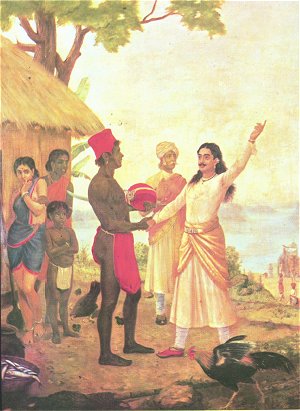
| Artist Ravi Varma's depiction of Bhishma abdicating the right of his throne to secure the hands of Matsyagandhi, a fishergirl, in marriage to his father Shantanu. Sri Jayachamarajendra Art Gallery, Mysore from http://www.kamat.com |
In the Indian worldview, society often moves not forward but in circles — always orbiting around the wisdom, will, and authority of the older generation. If in the Western imagination the son replaces the father, in the Indian imagination the father continues to rule through the son.
This pattern — where the older generation refuses to yield and the younger learns to submit — is what can be called the “Yayati Complex.” It is the idea that the father never grows old, that he continues to draw vitality from the youth of the next generation.
The story of King Yayati from the Mahabharata captures this perfectly: cursed with premature old age, he persuades his son Puru to take on his curse so that he himself can remain young. It is a story of love, duty, and sacrifice — but also of control, guilt, and inherited obedience.
The Yayati Complex is not just mythology; it is a living social pattern, visible across our institutions — in politics, sports, cinema, and family life.
In Indian cricket of the 1990s, despite brilliant performances by young Ranji players, we continued to rely on the same set of “experienced” seniors. Experience enjoyed a divine sanctity in our selections. The older players always returned for major tours — to Australia, to England — and we celebrated their “experience” as if it were a virtue beyond talent or form. Even debates around Sachin’s retirement were shaped by this mindset — that experience, not present ability, defines worth.
In politics, the same psychology rules. The older generation continues to dominate the national scene. Much of Indian politics still speaks the language of the 20th century, trapped in the logic of post-Independence ideals. The Congress remains captive to its Nehru-Gandhian imagination; the BJP took years to move beyond the Atal-Advani era; regional parties cling to patriarchal figures like Bal Thackeray or Karunanidhi, whose shadows loom long after their time. Even our so-called “Young Turks” often inherit both position and permission from their elders.
In cinema, the pattern finds poetic expression. The “angry young man” — that beloved figure of 1970s Bollywood — is not rebelling against his father but fighting for him. He avenges his father’s humiliation, redeems his father’s failure, and restores his father’s honour. In another familiar theme, the good son sacrifices everything for his flawed father’s happiness. Later, with romantic films like Qayamat Se Qayamat Tak, the young finally began to defy the father — though only briefly, and often tragically.
So, is the Yayati Complex good or bad? Perhaps neither. It has given Indian society continuity, stability, and deep respect for age. It kept the family system intact, preserved our cultural memory, and ensured that the old are never discarded.
But the price has been heavy. Tradition has triumphed over imagination. Reverence has replaced renewal. We have often lost the dynamism of culture to the rigidity of custom.
The challenge for 21st-century India is to turn this “demographic dividend” into creative energy — where wisdom of the old empowers the courage of the young, not consumes it.
Let’s see if the new generation can finally help the father rest — and still keep the family whole.
Friday, May 03, 2013
Timeline: Sarabjit Singh
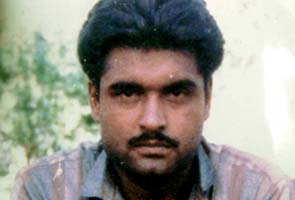
| Sarabjit Singh (Image from NDTV) |
- Aug 1990: Sarabjit Singh, a resident of Amritsar in north India, was arrested near the Kasur border on charges of illegally crossing into Pakistan from India. Pakistan’s Police later charged him for being involved in a series of bombings in Lahore and Faisalabad that killed 14 people.
- Oct 1991: Sarabjit Singh was convicted of spying and carrying out the bombings and was sentenced to death under Pakistan’s Army Act. The sentence was upheld by a higher court.
- Aug 23, 2005: The Sarabjit's case was taken up in both the houses of the Indian Parliament, where the government was asked to take necessary action for his release
- Oct 2005: Prime Minister Manmohan Singh raised the issue with President Musharraf during their meeting in New York in 2005, on the sidelines of the UN General Assembly. President Musharraf assured that he would look at the question of clemency to Sarabjit Singh in a humanitarian way.
- Mar 2006: Pakistan’s Supreme Court rejected Sarabjit Singh’s appeal for mercy and upheld his death sentence.
- Mar 17, 2006: MEA had formally requested the Pakistan High Commission in New Delhi to treat the matter sympathetically and to examine his mercy petition with compassion
- Mar 2008: Sarabjit Singh’s then applied for mercy plea to the then President of Pakistan Parvez Musharraf. The renewed mercy plea was turned down by Pervez Musharraf.
- However, his execution was later delayed by the Pakistani government following the appeal from the family of Sarabjit Singh’s family and the Indian government.
- Mar 18, 2008: The then External Affairs Minister in a Suo Motu Statement in the Lok Sabha on March 18, 2008 appealed to the Government of Pakistan to treat Sarabjit Singh’s case with clemency on humanitarian grounds.
- Dec 2009: A British lawyer, Jas Uppal, launched an international campaign for Mr. Singh’s release.
- May 2012: Mr. Singh filed his fifth appeal for clemency before Pakistani President Asif Ali Zardari.
- June 2012: President Zardari commuted his death sentence to life imprisonment following which Pakistan authorities said they would release Mr. Singh as part of a prisoner swap with New Delhi. Later, Pakistani officials said they were releasing a different Indian man convicted in the 1980s of being an Indian spy. The flip-flop angered India and human rights groups.
- Aug 2012: Sarabjit Singh filed a fresh appeal for mercy before Mr. Zardari.
- Apr 26, 2013: Sarabjit Singh was severely injured after allegedly being attacked with bricks by jail inmates in Pakistan. He was admitted to intensive care. His family called for his transfer to India for treatment but the Pakistan authorities refused to move him.
- May 1, 2013: Sarabjit Singh died from his injuries in a hospital in Lahore.
Thursday, March 14, 2013
BANGLADESH: WAR TRIALS, SHAHBAG PROTEST AND VIOLENCE
- On January 21 2013, the tribunal sentenced Abul Kalam Azad, a cleric, to death in absentia, finding him guilty of torture, rape and genocide. He was a junior leader in the student wing of the Jamaat-e-Islami party in 1971 and a member of the Razakar Bahini, an auxiliary force set up to help the Pakistani army by rooting out local resistance.
- On 5 February 2013, the tribunal found Abdul Quader Mollah, assistant secretary-general of the Jamaat-e-Islami, guilty of crimes against humanity during the war for independence and sentenced him to life imprisonment.
- On 27 February 2013, the tribunal found another accused Delwar Hossain Sayeedi of war crimes and sentenced him to death. Sayedee, Jamaat-e-Islami Vice President is for setting afire 25 houses in a Hindu village, and abetting the killing of two persons, including a Hindu.
Monday, December 03, 2012
Direct Cash Transfer & Political Behaviour
- The paper finds that political participation and political views are responsive to targeted transfers.
- The paper shows that beneficiaries of FA (Columbian the Familias en Accion – Columbia’s Cash Transfer) Program are around 2.5 percentage points more likely than comparable non-beneficiaries to vote.
- The increase in intent-to-vote and actual turnout is explained by larger political participation among beneficiary women.
- The paper observes that ‘During the 2010 presidential election voters covered by FA not only voted more often, but also expressed a stronger preference (around 2 percentage points) for the official party that implemented and expanded the program.’
- The beneficiaries value and respond positively to such policies at the polls.
- Reciprocity, where voters support politicians who helped them in the past. Here, the paper mentions that women in particular have been found to vote more systematically in support of social policies.
- Another
explanation is that the program was ‘strategically targeted’ and
motivated by ‘clientelism and vote buying’.
- The paper ends with cautious note that ‘it is highly unlikely that the overall change in political preferences attributed to FA explains the final outcome of the 2010 presidential election. The results, however, show that voters respond to targeted transfers and that these transfers can foster support for incumbents.’
Monday, November 19, 2012
Brief: Section 66A of the Information Technology Act
Use of Section 66A
- Professor in Kolkata: Jadavpur University professor Ambikesh Mohapatra, was arrested in April, 2011 for posting a cartoon on West Bengal chief minister Mamata Banerjee on the internet. Ambikesh Mohapatra was charged under under 66A of the Information Technology Act, 2000; under Section 500 (defamation); 509 (insulting the modesty of a woman through word, gesture or act) and u/s114 (presence of abettor at the time of commission of offence
- Aseem Trivedi and Cartoons Against Corruption: Aseem Trivedi was arrested in September, 2012 following a complaint filed against the cartoons authored by him which depicted national symbols in cartoons questioning corruption. Though the specific cartoon in the police complaint on which the arrest was made are not specified, his cartoons can still be accessed on his facebook page. Based on this Aseem was charged under of section 66A of the Information Technology Act, 2000; 124A of the Indian Penal Code, 1860 (sedition); under Prevention of Insults of National Honour Act, 1971.
- Heena Bakshi post on Chandigrah Traffic Police Webpage: After Heena Bakshi’s car was stolen due to alleged harassment she wrote a post on the facebook page of the Chandigarh Traffic Police. The posted contained expletives, though they were not directed on the police directly. Heena Bakshi was booked under Section 66A and Section 67 of the Information Technology Act, 2000.
- Ravi Srinivasan - IAC volunteer was charged under 66A of IT Act, an offence, for which he can be fined and jailed upto 3 years—- And all this for sending a tweet to 16 followers— “got reports that karthick chidambaram has amassed more wealth than vadra.”
Problems with 66A
- Sec. 66A & Article 19(2): The freedom of speech and expression is a fundamental right contained under Article 19(1)(a) which is subject to the “reasonable restrictions” contained within Article 19(2). Towards this, Sec. 66A of the Information Technology Act, 2000 contains broad phrases which will not fall within the reasonable restrictions as contained under Article 19(2). The phrases include under, Sec. 66A(1) “grossly offensive” and “menacing character”; Sec. 66A(2) “annoyance, inconvenience..”; and Sec. 66A(3), “purpose of causing annoyance or inconvenience”.
- Vagueness Offences under Sec. 66A: The phrases contained under Sec.66A do not find definition through the Information Technology Act, 2000 or do not have analogous provisions under other laws. Due to the absence of any definitions of “grossly offensive” or “menacing character”, the offences under it are without any limitation. In as much due to the vague phrasing the act is vulnerable for arbitrary use.
- Duplicity of Offence under Sec. 66A: The offences under 66A result in a duplication of offences which are contained under existing penal laws which are adequate to check the commission of crimes and also contain legislative and judicially defined limitations.
- Offence under Sec. 66A applies only to online speech: This presents a problematic outcome where the same speech may be legal offline but may be illegal online. This has the tendency to place an unreasonable restraint on a medium without a valid differentia or purpose.
- Lack of clarity in Sec. 66A: The Sec. 66A does not contain one offence, but contains any possible offence for uploaded content. The Sec. 66A lacks any coherence and structure as to the commission of a single offence. Due to this lack of clarity it does not contain any definite elements of an offence which are specified in its clauses. This is most noticeable in Sec. 66A(2), which contains a list of distinct grounds under which the section can be attracted. Most of the grounds are not even specified for instance, “annoyance” or “inconvenience” does not contain any ingredients.
- Offence under Sec. 66A is cognizable: Another anomalous position is presented as the punishment which is prescribed under Sec. 66A is a term of imprisonment for 3 years. This makes it cognizable and non-bailable. Hence with the application of 66A the accussed may fear arrest and the police seeking their custody.
- Offence under Sec. 66A increases jail terms for existing offences: In addition to duplication of existing offence, Sec. 66A increases the jail terms excessively of existing offences.
Friday, November 16, 2012
Chinese New Leadership
![]() |
| Picture from BBC |
- Xi Jinping has become China's new Communist Party chief, and is now certain to take over next year as the country's President as well.
- Xi also assumed chairmanship of the Central Military Commission (CMC). This is a significant departure from the 2002 transition when Hu’s predecessor Jiang Zemin had stayed on as head of the military commission for two years after stepping down as party chief.
- He is a privileged son of a former top leader, and called as 'princeling'. He is learning Chinese politics from an early age when his father was purged and he himself was sent to work in the countryside.
- Mr Xi's close ties to the military and his support for state-owned industries suggest he's conservative.
- He is among integrationist, assertive towards Taiwan’s integration with China.
- He is seen as a pro-market reformer and a staunch believer in party power.
- He was born in Beijing in 1953.
- He studied chemical engineering in Tsinghua before joining the Party in 1974.
- Xi worked in Hebei, Fujian and Zhejiang, before being named Shanghai party chief in 2007 and tasked with cleaning up a corruption scandal. He spent much of his career in Shanghai and the coastal provinces of Fujian & Zhejiang, all of them economically vibrant
- He is known as Anti-Corruption crusader. He has a reputation for straight-talking, telling officials in 2004: 'Rein in your spouses, children, relatives, friends and staff, and vow not to use power for personal gain.'
- His wife is - the folk singer Peng Liyuan.
- Expected to be the next Premier, Li, is a protege of outgoing President Hu Jintao.
- Li Keqiang's career has seen him rise from manual labourer on a rural commune to provincial party chief and now a leader-in-waiting.
- He has a reputation for caring about China's less well-off, perhaps the result of a modest upbringing.
- His easy-going manner and consensual style has prompted some to question whether he is dogged enough to tackle strong vested interests which dominate much of China's economy.
- Born in 1955 in Anhui Province, Mr Li reportedly rejected his father's offer of a local party career, enrolling instead at Beijing's Peking University to study law. Mr Li became deputy party secretary for Henan Province in 1998, and became China's youngest provincial governor a year later.
- Li ran two key industrial provinces. As a vicepremier, his portfolio includes health reforms, energy and food safety. Still, questions of inexperience on economy have dogged him as he prepares to take the post of premier, the top economy job in China
- Zhang Dejiang was chosen by China's leaders for their toughest assignment of 2012, taking over as party chief of Chongqing after the fall of Bo Xilai.
- It cemented his reputation as a trouble-shooter who could be relied on to manage a crisis, and suggested he was set for the very top.
- Mr Zhang is one of few experts on a China's oldest ally, North Korea, and even spent two years studying economics in Pyongyang.
- He is son of a PLA major-general. He started his party career on the North Korean border, before being moved to Zhejiang and then working as party secretary in Guangdong between 2002 and 2007.
- He was vice-premier in charge of Industry and ran two key economic powerhouse provinces.
- He is being criticised for slow response of his government when SARS broke out in the province in 2002.
- Mr Zhang was heavily criticised. His tough stance towards protestors and journalists was also unpopular.
- He is not known to be a reformer, and opposed allowing businessmen to join the party.
- Yu Zhengsheng is party chief of Shanghai, China's largest city.
- A 'princeling' with close ties to both former president Jiang Zemin and Hu Jintao, he also has links to the late Deng Xiaoping's family.
- Unusually, his political career survived his brother's defection to the US in the mid-1980s, possibly thanks to the backing of Deng's disabled son. His father was ex-husband of a woman who later married to Mao Zedong.
- He is a missile engineer, specialising in ballistic missiles.
- He later worked as mayor and party chief of the eastern city of Qingdao and was credited with helping launch two of China's best-known brands overseas - Tsingtao beer and Haier appliances.
- Mr Yu prefers to travel in a simple car without a motorcade, and surrounds himself with few bodyguards, it was revealed in leaked diplomatic cables from 2007.
- Mr Yu has talked about tensions between urban development and the environment.
- Liu Yunshan, 55, is head of the party's propaganda department, the body which strictly controls the country's media and polices the internet.
- But he encouraged state media to expand overseas to push government line.
- He worked in Inner Mongolia from 1968, as a young man to work in a commune. He later became a Xinhua news agency reporter, public relations specialist, and finally deputy party secretary.
- Born in Xinzhou, Shanxi, he joined the party in 1971 and was a graduate of the Party School.
- He worked with President Hu Jintao at the party youth league and is seen as a close ally. He was also considered as staunch supporter of Jiang Zemin.
- Mr Liu's son, Liu Lefei, is a prominent private equity investor.
- Mr Liu is expected to take over the propaganda portfolio.
- Mr Liu has expressed concern over the growing numbers of Chinese using online forums to criticise the government.
- A technocrat with experience in finance & trade issues.
- Wang Qishan is well known face in West, a key figure in discussions about the global economy and China's economic links with the US.
- Henry Paulson, the former US treasury secretary, described him as 'decisive and inquisitive', and someone with a 'wicked sense of humour'.
- He is often compared to his political mentor, former premier Zhu Rongji. Both are known by their nickname, 'fire brigade chief', because of their crisis management.
- Mr Wang is a 'princeling', the son of a top official, and he is married to Yao Minshan, daughter of former vice-premier Yao Yilin.
- He joined the party relatively late, at age 35, and worked as a banker.
- He was made mayor of Beijing in 2004, at the height of the SARS crisis and was credited for a no-nonsense approach, enforcing quarantine and working with the World Health Organisation.
- He played important role in fending off US pressure over China’s currency policies.
- A low-key technocrat who adheres to “Do more, speak less” motto.
- Zhang Gaoli has presided over the development boom in Tianjin, a large and wealthy city east of Beijing.
- Born in Fujian, he graduated from Xiamen University and studied statistics and economics.
- He spent the early part of his career working in the oil industry, before becoming an official in the southern province of Guangdong in the mid-1980s.
- His career took off from 1998 as party boss of the southern boomtown of Shenzhen, across the border from Hong Kong.
- While overseeing the city's development, he also established close ties with former President Jiang Zemin and his supporters, a relationship which helped ensure Mr Zhang's promotion to governor of the province of Shandong in 2002.
- Mr Zhang has been a low-profile leader in Tianjin, and little is known about his views or personal life.
![]() |
| AP Photo / Vincent Yu |